Does Your Cat Think You’re Their Mom? Ten Adorable Clues Your Feline Is Basically Your Tiny, Furry Shadow

If you’ve ever wondered whether your cat sees you as a glorified staff member or something vaguely resembling a parent, good news: the answer might be both. Cats pride themselves on being independent, mysterious little creatures… and yet they often latch onto one human with the emotional gusto of a toddler clutching their favorite blanket.
Animal behavior specialists say this attachment isn’t literal “my-human-is-my-mother” thinking—your cat knows you didn’t give birth to them (mostly because you don’t have fur and you’re terrible at mouse hunting). But their instincts can lead them to treat you like the trusted figure who keeps them safe, fed, warm, and adored.

Here are ten hilariously sweet behaviors that reveal your cat sees you as their safe place, emotional anchor, and possibly their personal butler.

  1. They follow you from room to room
    If your cat tracks your movement like a tiny detective with nothing better to do, congratulations—your furry friend feels safest when you’re around. Just like kittens stick close to mom for security, your cat may pad behind you simply because you are their personal comfort zone. Don’t be fooled: they’re not “checking on you.” You are being supervised.
  2. They knead with their paws
    Kneading is one part nostalgia, one part affection, and one part “I’m about to get way too comfortable on your lap so don’t move.” Adult cats knead when they feel calm and secure, echoing their kittenhood milk‑making technique. It’s the feline version of a warm hug… with claws.
  3. They bring you gifts
    Nothing says “you’re family” like a cat proudly presenting you with a toy, a leaf, or—if they’re feeling ambitious—a slightly horrifying outdoor discovery. While you may wish they’d choose chocolate instead, this instinct is rooted in care. Mother cats bring kittens prey to teach them hunting. Your cat is just trying to help. Or show off. Or both.
  4. They meow frequently at you
    Cats do not meow at each other. They reserve this language exclusively for humans, like you’re the only one who understands their dramatic monologues. Frequent meowing is a sign your cat wants attention, reassurance, or maybe a third dinner. Either way, you’re the chosen human.
  5. They sleep close to you
    Sleep is vulnerability. So when your cat curls up against you, they’re basically saying, “I trust you not to betray me during REM.” Whether they sleep on your pillow, at your feet, or glued directly to your spine, it’s affection in its purest form.
  6. They rub their head against you
    This isn’t just affection—it’s a scent‑claiming ritual. When your cat head-butts you, they’re marking you as “mine.” Consider yourself officially owned.
  7. They groom you occasionally
    A sudden lick to the hand or hair is not random—it’s social grooming. Cats groom those they consider part of their inner circle. Your cat thinks you’re important enough to keep clean. Cherish this slightly soggy honor.
  8. They look at you with slow blinks
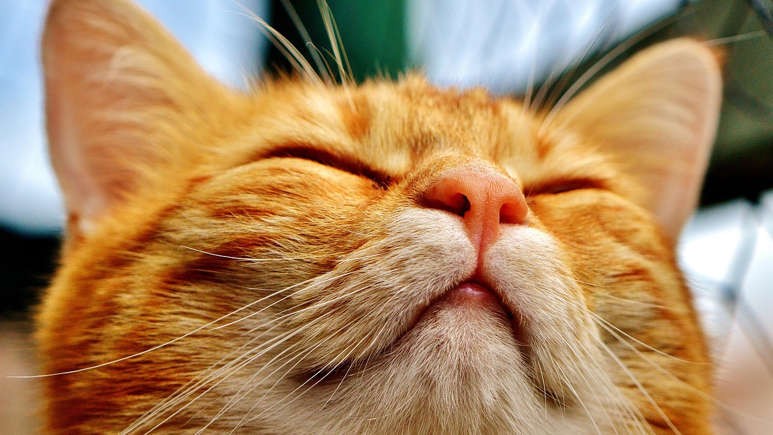
    The slow blink is the feline “I feel completely safe with you.” It’s soft, sweet, and subtle. Experts even call it the “cat smile.” Try slowly blinking back—you might just start an entire blink‑versation.
  9. They greet you at the door
    If you come home to a cat waiting like you’re a returning hero from battle, that’s love—and routine. Cats notice your absence and anticipate your return, whether with a meow, a head bump, or judgment that you were gone too long.
  10. They seek comfort when stressed
    Storms, loud noises, mysterious household shadows—they all send a worried cat searching for safety. If your lap, your arms, or your general presence becomes their refuge, you are officially their security blanket.

My Georgie does numbers 1, 2, and 4 all the dang time—like it’s his full‑time job—and he’ll sprinkle in 5, 6, and 9 whenever he’s feeling extra affectionate or dramatic. So that’s 6 out of 10 on the “My Human Is My Mom” scale, which, honestly, is pretty impressive. I feel blessed to have my little rescue kitty, and even more blessed that he wants attention constantly. There’s nothing like being adored by a furry shadow who thinks you’re the center of the universe.
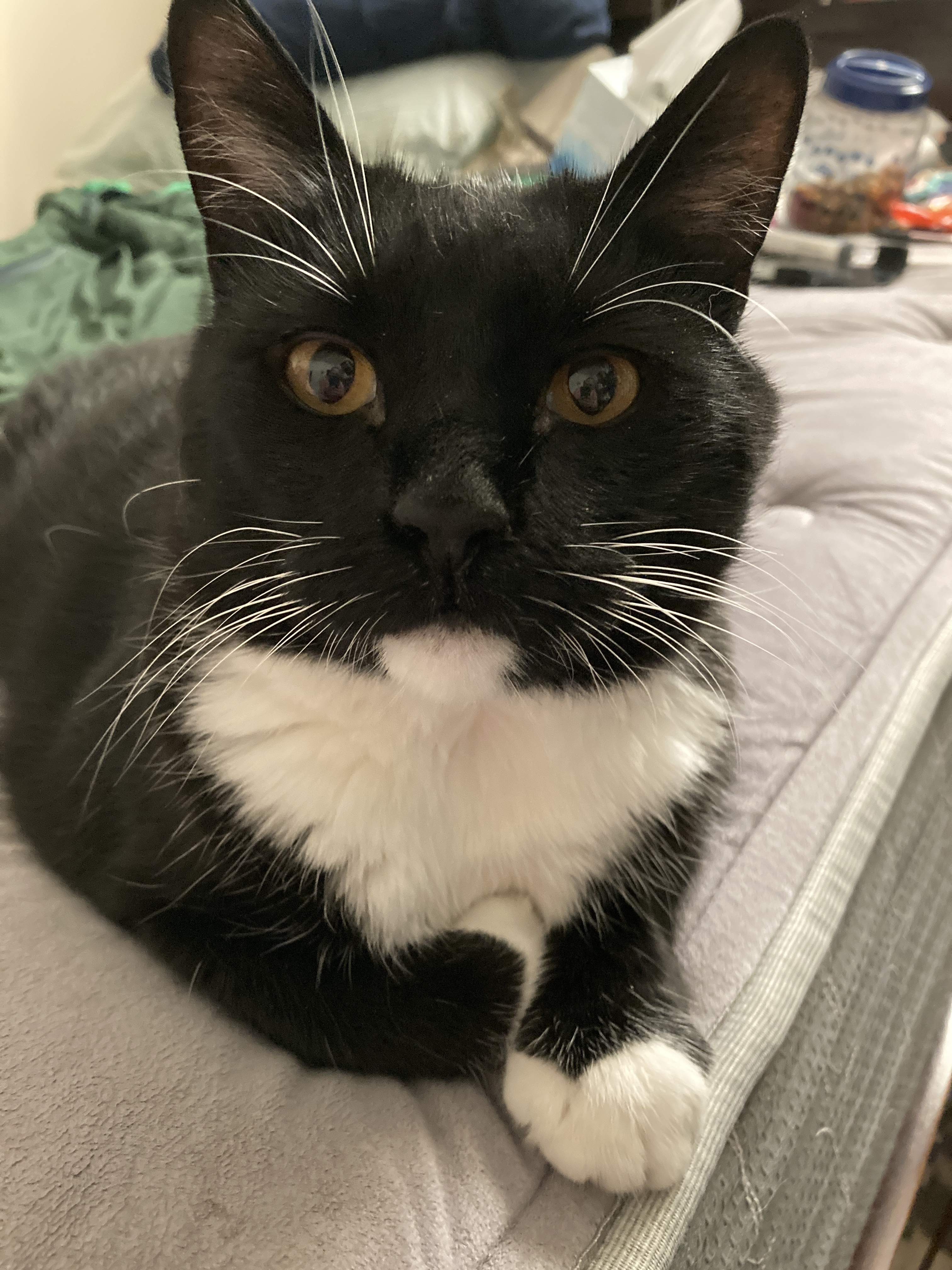
Georgie

Cats might be cryptic, aloof, and occasionally chaotic, but their affection—when it’s given—is real, loyal, and deeply instinctive. When your feline does these things, they’re not just being cute. They’re saying, “You’re my safe place.”

And honestly? There’s no higher honor.
Holy crap England!

The horrifying moment when a three‑year‑old boy was suddenly grabbed and thrown into a crocodile enclosure at a British zoo is the kind of event that stops time. Families were enjoying an ordinary day out when a mentally unstable stranger, acting without warning or reason, lifted the child and hurled him over the barrier into the pit below. Gasps turned to screams as the boy hit the ground inside the enclosure, surrounded by crocodiles—ancient predators capable of explosive speed and devastating force. The shock of the fall left him crying and disoriented, while the reptiles began to shift toward the unexpected movement. In those first seconds, the situation was as close to catastrophic as any parent could imagine.

What happened next was driven entirely by instinct and courage. A zookeeper — the owner of the zoo — who had been nearby, didn’t hesitate for even a heartbeat. She leapt into the enclosure, and members of her family who were present followed her in, fully aware of the danger they were stepping into. As the crocodiles reacted to the commotion, one managed to clamp its jaws around the child, and the rescuers were suddenly fighting against both time and a predator’s raw power. They threw themselves between the boy and the animals, shouting and striking the ground to distract them while she wrestled the child free from the crocodile’s mouth, prying him loose with a desperation that left no room for fear. Entering a crocodile enclosure is something even trained professionals avoid unless absolutely necessary; a crocodile can lunge faster than a human can react, and one wrong step could have meant disaster. Yet the rescuers moved with a clarity and urgency that defied the chaos around them. Once the boy was freed, they lifted him into their arms and passed him up to safety before climbing out themselves, miraculously unharmed.

The fact that this happened in a British zoo—a place families visit expecting safety, education, and calm—makes the incident even more shocking. This was not a tragic accident or a moment of misjudgment. It was an act of violence committed by a stranger in the grip of severe mental instability, a reminder of how unpredictable and fragile public spaces can be. Zoos are designed to protect visitors from animals, but they cannot always protect them from the actions of other people. The incident raises difficult questions about mental health support, public safety, and how institutions can prepare for events that fall far outside the boundaries of normal risk.

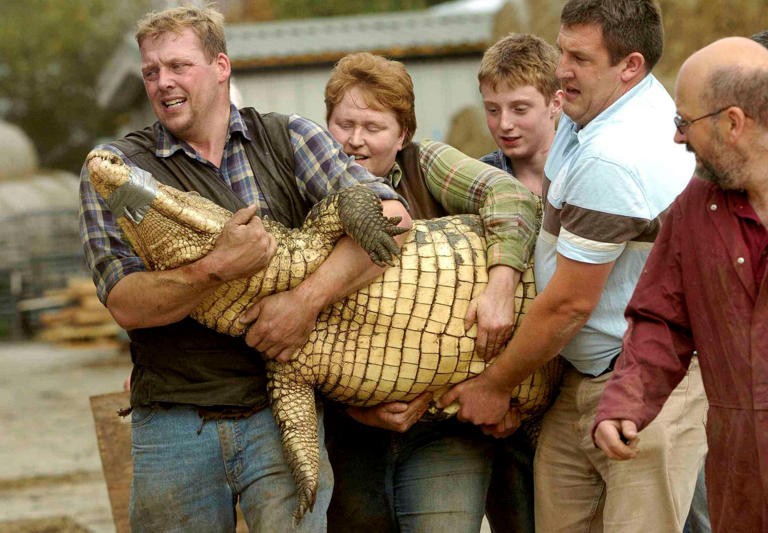
Zookeeper Andrew Johnson and wife Tracey rescued a three-year-old who had been thrown 15ft into the enclosure (Picture: SWNS)

It’s impossible to overstate how close this came to disaster. A few seconds’ hesitation, a single misstep, or a crocodile reacting faster than expected could have changed the outcome entirely. Instead, the boy survived – although with critical injuries, the rescuers survived, and a moment that could have ended in unimaginable grief became a testament to instinctive bravery and the power of human compassion. This incident will undoubtedly spark conversations about safety barriers, visitor supervision, and emergency response protocols, but at its core, it remains a story about people who chose to act when it mattered most. In a world where headlines often focus on division and conflict, this moment stands out as a reminder of the courage that still exists quietly among us—courage that leaps into danger without hesitation when a life hangs in the balance.

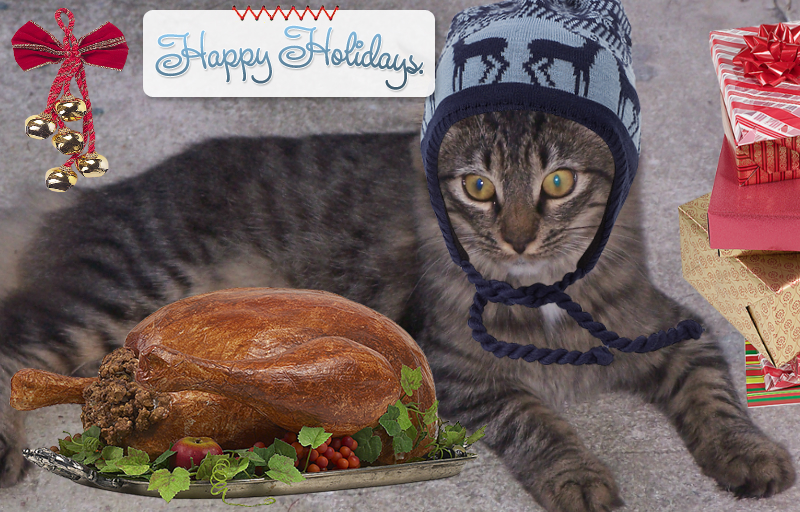
Happy Holidays

I would like to wish everyone a happy holiday season.  And be careful out there!

No animals were hurt or embarrassed but we have one very tired photoshop person!

Snakes Are NOT Slimey!!

I don’t know why this fallacy upsets me so much, but it does.  Now, I am not a huge fan of snakes – or reptiles in general, for that matter.  But I need to take a moment to step back in time to explain.

When I was 14 or 15 years old – and being the huge animal lover I am – I decided it would be a great thing for me to begin volunteering at my local zoo.  I applied, was accepted and then “assigned” to the reptile keeper.  I need to stress that working with reptiles was not what I had wanted and even had second thoughts about the whole volunteering idea.  I much would have preferred to work with felids (cats) and preferably neonates (babies).  But, alas, no.  So I spent the next four years working with reptiles.  Not exclusively, after a while I was able to help other keepers – or even the reptile keeper, when he  had swing duties.  (Swing duties refers to helping cover other departments when that keeper was sick or on vacation.  If you ever see a job advertising a Swing Keeper you’ll know what they are referring to.)

Anyway, back to the reptiles.  I worked with all the snakes (all non-venomous) as well as various lizards, turtles and alligators and crocodiles.  I have personally handled all these animals.  (Yes, all.)  And I can tell you from experience that snakes (or any of the other reptile species I worked with) are not slimey!  Snakes are actually dry and soft.  I have never seen or heard of a slimey snake – unless it was sleeping in the water bowl.  Their scales are quite shiny and when the sun hits them just right, can appear iridescent.  And I think this is where the notion of “slimey” comes from.

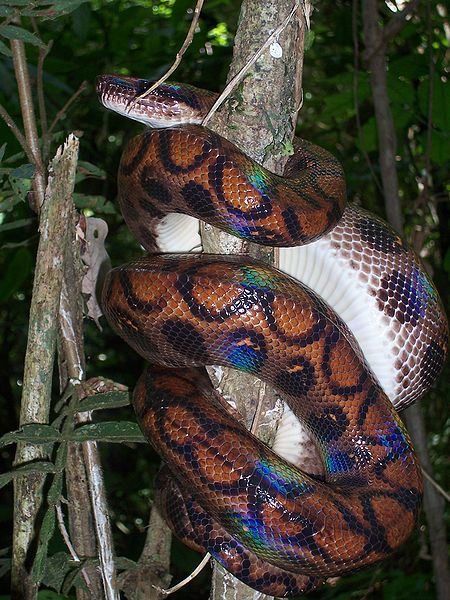
Photo by Damien Farrell

There are some species that are quite beautiful.  For example, I worked with a Rainbow Boa (also called a Slender Boa) named Baby.  She was the most beautiful and docile snake in the zoo.  She is the only snake I would not hesitate to pick up even today.  As you may have guessed, the Rainbow Boa gets its names from the amazing colors in sunlight – producing a rainbow-type coloration.  The photo to the left is one of the best photos I could find to illustrate this point.

Fast forward to the present.

Since it has been so many years since I have worked with reptiles I am quite hesitant around them again.  Most reptiles give very little indication when they are distressed.  So one minute everything seems fine, then next you are  trying to disengage their mouth from your person.  Reptiles tend to have very small brains compared to their weight and strength.  For example, an alligator has a brain that weighs 8.4 grams, where even a squirrel’s brain weighs 7.6 grams.  I find it terrifying that these animals can be so large and massively strong and yet so stupid.  (For anyone interested a viper has a brain weight of 0.1 grams)  I bring up the issue of brain weight because many scientists believe that the brain-to-body mass ratio will give you a rough estimate of intelligence.

So now, I am happy to watch these animals but much prefer a barrier between us.  Working with them, I think, has offered me an insight that I can’t quite explain.  I seem to observe them on a different level.  Maybe one day I will understand it and be able to articulate it better.