Okay, I don’t know what is going on in the universe right now, but crocodiles have been everywhere in the news. It feels like every time I open my feed, there’s another story — more dramatic, more terrifying, more surreal than the last. And when you line them up, it’s honestly wild how many major crocodile incidents have hit the headlines in such a short time.
It started with that horrifying case of the boy thrown into a crocodile enclosure at a British zoo — not an accident, but a deliberate act by a mentally unstable stranger. The zoo owner and her family jumped in without hesitation, even wrestling the child out of a crocodile’s mouth. That alone was enough to make anyone’s stomach drop.
But then came the resort attack in Mexico, and this one was just heartbreaking.
A Southern California couple — Chris Bury and Jamie Yetter — were on a family vacation in Puerto Vallarta, celebrating Yetter’s daughter’s high school graduation. They were relaxing at the hotel pool when they heard screams from the beach. At first, they thought someone was caught in a rip current. They ran toward the water, ready to help.
But what they saw was something no one is prepared for.
“The crocodile had him by the thigh,” Yetter told ABC7. She described the animal’s head as being the length of her torso, its tail thicker than her legs. It was rolling the swimmer — a 28‑year‑old local man named Irving — dragging him under in the classic death roll crocodiles use to drown prey.
Bury tried to throw Irving a life preserver, but the man was in shock, flailing, unable to grab it. Bury even jumped into a kayak to reach him, but by the time he got close, the crocodile had already taken him under. Irving’s body was found 12 hours later after a massive search involving the Mexican Navy and lifeguards.
And here’s the part that stunned everyone: The beach was still open the next morning. No warning signs. No closure. Nothing.
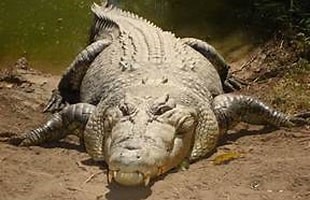
Officials called the attack “extremely unusual,” noting that Puerto Vallarta sits beside natural crocodile habitat and that fatal attacks are incredibly rare — statistically one death per 2.5 million people. But the rainy season had raised water levels, allowing crocodiles to move closer to beaches. After the attack, surveillance increased, and visitors were urged to avoid areas where crocodiles had been reported.
You’d think that would be the end of the crocodile news cycle.
But no. Because then came the Komati River story — and this one is straight out of a horror movie.
A 1,100‑pound crocodile was found sunbathing near the last known location of Gabriel Batista, a 59‑year‑old South African man swept away by floodwaters. His truck had been stranded at a river crossing, and rising water pushed him out and into crocodile‑infested waters. Rescue teams searched for a week before spotting the massive crocodile lounging on the bank — a behavior crocodiles often display after a large meal, since they rely on sunlight to digest.
Authorities suspected the worst.
They airlifted the crocodile — a risky operation requiring trained personnel to descend from a helicopter — and euthanized it so they could perform an autopsy.
Inside its stomach, they found human remains. DNA confirmed they belonged to Batista.
But that wasn’t all.
They also found six pairs of shoes.
Six.
Authorities haven’t yet confirmed whether those shoes are linked to other missing persons, but the implication is chilling. Crocodiles are apex predators. They don’t just take one victim. They take whatever crosses their path.
So yes — crocodiles have been loud in the news lately. Between a child thrown into an enclosure, a fatal resort attack witnessed by vacationing families, and a massive crocodile containing multiple pairs of shoes and a missing man, it feels like the universe is reminding us that these animals are not just background wildlife. They are powerful, territorial, and absolutely capable of dominating any environment they inhabit.
It’s not that crocodiles are suddenly more aggressive. It’s that humans keep getting closer — building resorts, crossing rivers, expanding into habitats where crocodiles have lived for millions of years.
But three major crocodile stories in a row? That’s enough to make anyone pause.

